
Detailed planning
Clinical examination, imaging, prosthetic design and treatment objectives are assessed before surgery.
AMAYRA DENTAL EDUCATION • NRI & IMPLANT TRAVEL
A practical guide to same-day loading, patient selection, digital planning, temporary teeth, travel coordination, follow-up and the final restoration.
Clinical guide source: March 2023. This article explains the source guide's clinical framework and should be reviewed by the treating dental team for an individual case.
Start with our broader Dental Implants in Pune: Complete Guide for candidacy, the implant procedure, full-mouth solutions, recovery and longevity. If you are travelling to India and are specifically interested in same-day temporary fixed teeth, continue with this guide.
Teeth in a Day is an immediate loading protocol in which a fixed temporary prosthesis is attached to dental implants shortly after placement. The protocol is suitable only when specific clinical stability criteria are achieved.
Despite its name, Teeth in a Day does not mean the entire treatment is completed in one day. The implants still require several months to biologically integrate with the jawbone through a process called osseointegration. What patients receive immediately after surgery is a carefully designed fixed provisional bridge that restores appearance, speech and basic chewing function while healing occurs beneath the gums.
After the healing period, the temporary restoration is replaced with the final prosthesis, which is fabricated using stronger, long-term restorative materials.
The protocol is commonly used for:
Immediate loading is never based on patient preference alone. The implants must demonstrate excellent primary stability before a temporary restoration can be safely attached.
Immediate loading depends on achieving high implant stability during surgery. When stability is sufficient, a temporary fixed bridge can often be connected within hours of implant placement.
Clinical examination, imaging, prosthetic design and treatment objectives are assessed before surgery.
After planning, implants are placed into suitable areas of bone, using digitally guided techniques whenever appropriate.
The surgeon evaluates how securely the implants engage the surrounding bone using clinical and mechanical assessment methods.
Only when adequate primary stability is achieved does the restorative team proceed with fabrication or attachment of the temporary fixed prosthesis.
The provisional restoration is designed to protect healing implants, restore facial appearance, improve speech, allow controlled chewing, maintain gum architecture and guide soft-tissue healing.
Patients are instructed to follow a modified diet during the initial healing period to minimise excessive loading while osseointegration occurs.
Immediate loading is appropriate only for patients who meet strict anatomical and biological criteria. Adequate bone quality, implant stability and overall health are more important than age alone.
Ideal candidates often have:
Because implant stability is determined during surgery, the final decision to proceed with immediate loading may occasionally be confirmed only after implant placement.
At Amayra Dental Clinic in Pune, the source guide describes candidate selection beginning with comprehensive digital evaluation using an in-house 3D CBCT scanner, digital smile design software and prosthetically driven treatment planning. It describes individual assessment to determine whether immediate loading can be performed without compromising long-term treatment goals.
Patients with inadequate primary implant stability, uncontrolled medical conditions or extensive untreated oral disease may require a delayed loading protocol instead of same-day teeth.
Immediate loading may not be recommended for patients with:
In many situations, allowing implants to heal without immediate functional loading provides the safest and most predictable long-term outcome. The treatment plan should prioritise biological success rather than speed.
Successful same-day implant treatment begins weeks before surgery through detailed digital planning, prosthetic design and multidisciplinary case evaluation. Immediate loading requires considerably more planning than conventional implant treatment.
Before surgery, clinicians evaluate:
This planning ensures that surgery and prosthetic rehabilitation work together as a single coordinated treatment process. For full-mouth rehabilitation, every implant must contribute to stable force distribution while supporting the temporary bridge during healing.
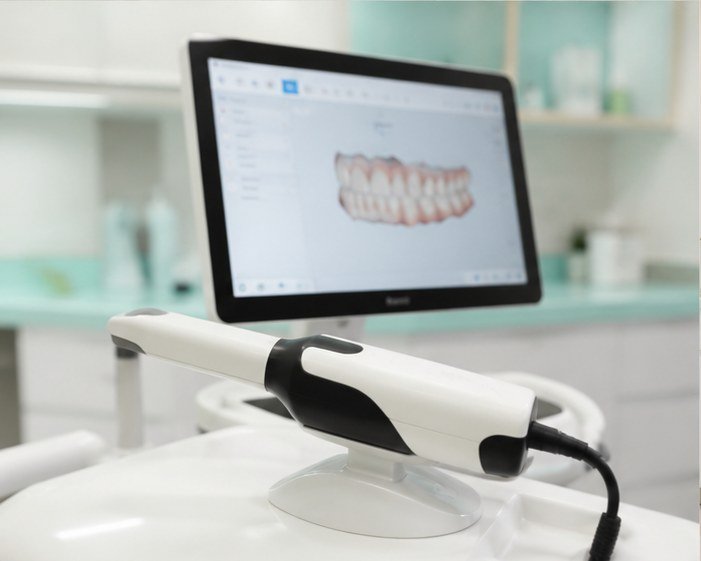
Digital planning allows clinicians to determine implant position before surgery, improving planning accuracy and helping identify whether immediate loading can be safely achieved.
Using CBCT imaging, digital impressions and computer-guided surgical software, clinicians can visualise:
At Amayra Dental Clinic, the source guide describes these technologies as part of full-mouth rehabilitation workflows. It also notes that coordinated digital planning can help reduce treatment time for outstation and NRI patients by allowing parts of the restorative workflow to be organised before surgery.
Read our 3D Digital Guided Implant Surgery: Complete Guide to understand CBCT, virtual implant planning, surgical guides, guided versus conventional placement and the role of prosthetically driven planning.
Primary implant stability is the key requirement for immediate loading. If adequate stability cannot be achieved during surgery, delayed loading is generally the safer treatment option.
Patients often ask before surgery whether they will definitely receive fixed teeth on the same day. The honest answer is: only if the implants are sufficiently stable.
During implant placement, the surgeon evaluates how securely each implant engages the surrounding bone. The source guide notes that established loading criteria include adequate insertion torque and implant stability before immediate loading is attempted.
If stability falls below the desired level, postponing loading protects the healing implants and reduces the risk of early failure. This decision reflects clinical judgement rather than being a treatment complication.
Same-day teeth are temporary restorations designed to protect healing implants while restoring appearance and function. They are replaced with a definitive prosthesis after successful osseointegration.
The temporary bridge fitted on the day of surgery is not intended to be the patient's permanent teeth.
Its primary functions are to:
After approximately three to six months, depending on healing progress and the complexity of treatment, the temporary prosthesis is replaced with the final restoration.
The definitive bridge is individually designed using stronger restorative materials such as high-strength zirconia, ceramic or advanced hybrid prostheses, depending on the patient's clinical requirements.
The permanent bridge is fabricated only after the implants have integrated with the jawbone. Waiting allows the gums and bone to stabilise, improving long-term fit, aesthetics and function.
Healing changes naturally occur during the first few months following implant surgery. As swelling resolves and soft tissues mature, the final prosthesis can be designed with greater precision.
Waiting also allows clinicians to:
This staged approach contributes to predictable long-term outcomes rather than rushing the definitive restoration.
If you are also deciding between implant materials or want to understand reference price ranges, see our Titanium vs Zirconia Dental Implant Cost Guide.
Careful digital planning allows many outstation and international patients to complete the surgical phase efficiently while reducing unnecessary travel. Follow-up schedules are individualised according to healing and prosthetic requirements.
The source guide describes India as a destination for advanced implant rehabilitation where patients can access experienced implantologists, modern digital technology and comprehensive treatment planning in a single centre.
At Amayra Dental Clinic, the source guide describes treatment beginning with in-house 3D CBCT, digital smile design and computer-guided planning, with diagnostic records and consultations coordinated before travel whenever possible. This streamlined workflow is particularly relevant to NRI patients who have limited time in India.
Receiving Teeth in a Day does not eliminate the need for follow-up care. Long-term treatment includes scheduled reviews, professional maintenance and fabrication of the definitive prosthesis after healing.
Patients should maintain regular communication with their implant team and follow dietary, hygiene and review instructions throughout the healing period.
Following surgery, patients are typically advised to:
Modern digital dentistry can also allow some postoperative reviews to begin remotely before patients return for definitive treatment when required.
Immediate loading can achieve excellent long-term outcomes when patients are carefully selected and adequate primary implant stability is achieved. Success depends on meeting strict biological criteria rather than simply placing implants and attaching teeth on the same day.
Research, as described in the source guide, shows that when established loading criteria are followed—including adequate bone quality, high primary implant stability, rigid splinting of implants and controlled occlusion—implant survival can be comparable with conventional loading protocols in appropriately selected patients.
The source guide identifies these important predictors:
Rather than focusing solely on immediate aesthetics, the treatment objective is to create an environment where implants can heal predictably while supporting a temporary restoration.
The success of Teeth in a Day depends less on the treatment name and more on the clinician's ability to select suitable patients, achieve primary stability and execute a carefully planned digital workflow.
Immediate loading is not appropriate simply because a patient requests it. The source guide describes Amayra Dental Clinic as evaluating each case using clinical criteria before recommending same-day loading, with Dr. Rupali's experience in full-mouth rehabilitation, digital implantology and computer-guided surgery combined with in-house technology.
The source guide also describes the clinic's experience with severe bone loss, failed implant revisions and complex rehabilitation cases that require individualised planning rather than a standardised protocol.
The objective is always to achieve a stable, functional and long-lasting result—not simply to complete treatment as quickly as possible.
No. Immediate loading is only recommended when adequate implant stability, favourable bone conditions and suitable overall health are present.
No. Patients receive a temporary fixed bridge on the day of surgery, while the final prosthesis is fitted after the implants have fully healed.
Typically three to six months. The exact timing depends on healing, implant stability and the complexity of treatment.
It can be appropriate for carefully selected patients when primary implant stability and favourable biological conditions are achieved. Individual suitability must be assessed clinically.
The implants are usually allowed to heal before loading. Delayed loading may provide the safer long-term option when stability criteria are not met.
Many can complete the surgical phase during a single planned visit. The definitive prosthesis is normally delivered after healing according to an individual treatment schedule.
Yes. Immediate loading is commonly used for full-arch implant restorations such as All-on-4 and All-on-6 when clinical criteria are satisfied.
No. Patients are advised to follow a modified soft diet during the healing period to protect the implants while osseointegration occurs.
It can improve treatment predictability by supporting implant positioning and helping clinicians determine whether immediate loading is clinically appropriate. It does not replace clinical judgement.
Possibly, but with caution. Smoking can increase the risk of implant complications and may influence whether immediate loading is recommended.
The source guide describes advanced digital planning, in-house CBCT imaging, computer-guided surgery and experience in full-mouth rehabilitation as part of the clinic's approach to coordinating treatment schedules for travelling patients.
For evidence-based information on immediate loading and implant rehabilitation, the source guide recommends consulting:
Explore our complete dental implant guide, learn about 3D digital guided implant surgery, compare titanium vs zirconia implants and reference costs, or review our dental implant cost guide in Pune.
NRI IMPLANT RESOURCE
If you are travelling from outside Pune or outside India, discuss your clinical records, imaging, treatment sequence and follow-up requirements with the implant team before finalising travel dates.
NRI & OUTSTATION IMPLANT PLANNING
Share your dental records and treatment questions with the Amayra team so your clinical assessment and travel schedule can be planned appropriately.
TRUSTED PARTNERS